First OAI Foundation U.S. Hands-on Workshop
The OpenAirInterface (OAI) Foundation held the First OAI Foundation U.S. Hands-on Workshop from 17 to 19 November 2025 at the University of Texas at Austin.
The workshop is part of the Foundation’s ongoing mission to provide open source-based reference implementations of 5G/6G technologies and to train a highly skilled new generation of engineers for the U.S. cellular wireless industry. This inaugural U.S. event represented a step in deepening engagement with the U.S. research and developer community and promoting OAI as a reference platform for 5G, 6G, and AI-native networks.
The workshop opened on Monday, November 17, with a full day of presentations, including keynotes from leading voices in the wireless industry and academia, panel discussions, technical talks, and live demos showcasing the latest OAI developments. November 18 and 19 were dedicated to hands-on training sessions, where participants worked directly with OAI technical leaders to deploy and configure software components, explore various use cases, and engage in technical discussions.
Workshop sponsors
Three cheers to our sponsors for supporting this workshop



Keynote speaker
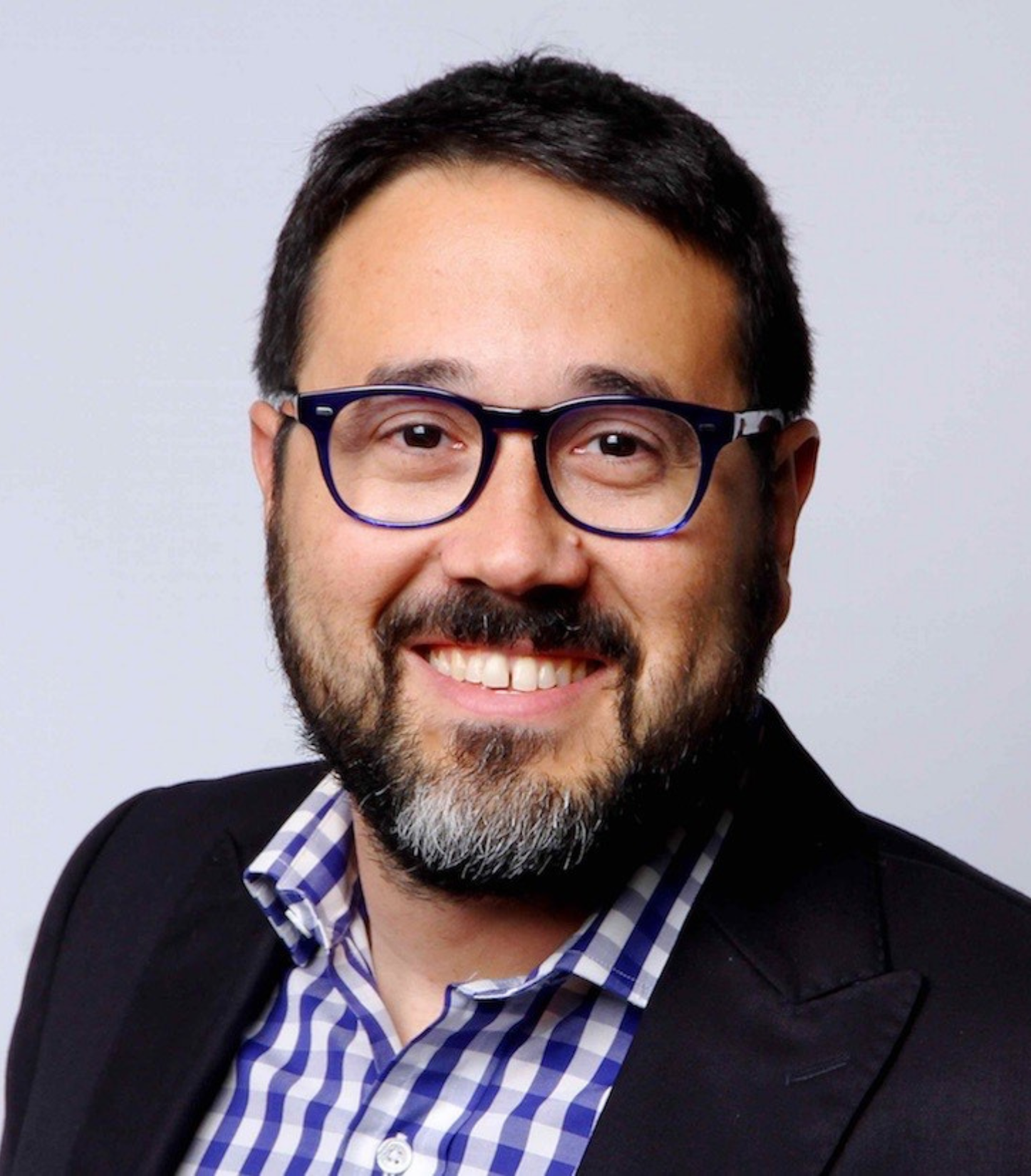
Hanen Garcia
Red Hat
Hanen Garcia – Red Hat: Hanen Garcia is Chief Architect, Telecommunications, in the CTO Office at Red Hat. With over 25 years of experience in the telecommunications industry, he specializes in building advanced network solutions and value-added services for global telecom operators. In his current role, Hanen is at the forefront of driving strategic initiatives and architectures to guide telecommunications service providers through their network transformation journey. Hanen holds a Master of Engineering in Innovation Management from ÉTS in Canada and a Master of Engineering in Telecommunications from Polytech Nancy in France.
Agenda
Day 1 (2025/11/17): Presentations
| Time Slot (CDT) | Speaker(s) | Affiliation | Title |
|---|---|---|---|
| 08:00 – 8:30 | REGISTRATION & BREAKFAST | ||
| 08:30 – 8:50 | Kaushik Chowdhury Raymond Knopp | UT Austin OAI Foundation | Welcome to UT Austin and to the Workshop |
| 08:50 – 09:30 | Hanen Garcia | Red Hat | Principles for 6G Infrastructure: Architecting Agile, Intelligent, and Sustainable Networks with OpenAirInterface |
| 09:30 – 10:00 | Irfan Ghauri Sagar Arora | OpenAirInterface Foundation | OAI Community Engagements: The Launch of OAI Foundation and that of Duranta |
| 10:00 – 10:30 | COFFEE BREAK | ||
| 10:30 – 11:15 | Paulo Marques Hongwei Zhang Syed Hussain Mahdi Sharara | Allbesmart Iowa State University Penn State VIAVI | Panel: Building the 6G Human Resource: Training and Upskilling for the Wireless Industry Moderator: Kaushik Chowdhury – UT Austin |
| 11:15 – 12:00 | Ben Coffin Chris Dick Doug Knisely Ganesh Shenbagaraman Hanen Garcia | NI/Emerson NVIDIA Qualcomm Radisys Red Hat | Panel: From Ideas to Reality in 6G Times: Open Reference Designs for AI-Enabled Next Generation Cellular Networks Moderator: Florian Kaltenberger – EURECOM |
| 12:00 – 13:00 | LUNCH BREAK | ||
| 13:00 – 13:20 | Vijay K. Shah | North Carolina State University | AI-O-RAN Convergence: From Foundational LLMs to Automated System Testing |
| 13:20 – 13:40 | João Morais | Arizona State University/NVIDIA | Data Generation for AI in 6G: Connecting DeepMIMO Ray Tracing Database to OpenAirInterface |
| 13:40 – 14:00 | Tingjun Chen | Duke University | Scalable and Real-time Baseband Processing using Heterogeneous Compute Resources |
| 14:00 – 14:20 | Imtiaz Karim | UT Dallas | Gotta Detect ‘Em All: Fake Base Station and Multi-Step Attack Detection in Cellular Networks |
| 14:20 – 14:40 | Daehyeok Kim | UT Austin | Toward SLO-Aware 5G Multi-Access Edge Computing |
| 14:40 – 17:00 | COFFEE BREAK & DEMO VISITS | ||
| Paulo Marques Ejaz Ahmed Florian Kaltenberger Tianyi Zhang Eisaku Sato Tetsuya Iye Charles Ueltschey Charles Ueltschey Simeon Wuthier Gabriele Gemmi Guillermo Marcus Nicolas Barati Zongshen Wu Dinesh Bharadia Divya Muruganandham | Allbesmart EpiSci EURECOM Iowa State University KKE KKE Mississippi State University Mississippi State University NIST Northeastern University NVIDIA Old Dominion University Rice University UC San Diego UT Austin | OAIBOX 5G Hands-on Kit: OpenAirInterface for 5G/6G Training and Education Enabling 5G Sidelink Mode 1 in Relay-Assisted UE-to-Network Communication O-RAN 6G Positioning Based on Channel Charting with OAI and FlexRIC Real-World Experiments with Predictable URLLC using OAI & ARA Wireless Living Lab Development of an OAI-based Multi-cell Simulation Platform by Physical Layer Abstraction OAI-Based Benchtop Wireless Digital Twin: FPGA/GPU Acceleration for Mobility Emulation OAI 5G in the AERPAW Testbed RAN Tester UE: a Declarative Approach to RAN Security Testing Automating the Deployment of 5G Open-RAN Testbeds Across Diverse Software Stacks ALLSTaR – LLM-Driven Scheduler Generation for Intent-Based RAN Sionna Research Kit: A GPU-accelerated Research Platform for AI-RAN Testing spectrum sharing for 5G Cellular Networks and Military Radars using OAI Enable Online Real-Time ML with OpenAirInterface in Virtualized 5G O-RAN Networks EdgeRIC and Tiny-twin on OAI: Demonstrating Real-Time AI Control Live Demonstration of an AI-Native Receiver with Adaptive Operation in OAI-based 5G Networks | |
| 17:00 – 19:00 | RECEPTION |
Day 2 (2025/11/18): Hands-on
| Time Slot (CDT) | Speaker(s) | Affiliation | Title |
|---|---|---|---|
| 08:00 – 8:30 | COFFEE | ||
| 08:30 – 10:00 | Jaroslava Fiedlerova Robert Schmidt Sagar Arora Teodora Vladić | OpenAirInterface Foundation | First Training Steps |
| 10:00 – 10:30 | COFFEE BREAK | ||
| 10:30 – 13:00 | Sagar Arora | OpenAirInterface Foundation | OAI Core Network Hands-on Session |
| 13:00 – 14:00 | LUNCH BREAK | ||
| 14:00 – 17:00 | Jaroslava Fiedlerova | OpenAirInterface Foundation | OAI RAN Hands-on Session |
| 17:00 – 18:00 | Bartosz Podrygajło | OpenAirInterface Foundation | Channel/O-RU Emulator Hands-on Session |
Day 3 (2025/11/19): Hands-on
| Time Slot (CDT) | Speaker(s) | Affiliation | Title |
|---|---|---|---|
| 08:00 – 8:30 | COFFEE | ||
| 08:30 – 10:30 | Mahdi Sharara Teodora Vladić | VIAVI OpenAirInterface Foundation | OAI OAM and VIAVI AI RSG Hands-on Session |
| 10:30 – 11:00 | COFFEE BREAK | ||
| 11:00 – 13:00 | Neel Pandeya | NI/Emerson | Introduction to SDR with the USRP Radio |
| 13:00 – 14:00 | LUNCH BREAK | ||
| 14:00 – 17:00 | Luìs Pereira Paulo Marques | Allbesmart | 5G Operational Walkthrough with OAIBOX™ and OpenAirInterface |
| 14:00 – 17:00 | Luìs Pereira Paulo Marques | Allbesmart | Understanding 5G NR security with OpenAirInterface (advanced) |
Recordings
Welcome to UT Austin and to the Workshop
Hanen Garcia – Red Hat
Irfan Ghauri & Sagar Arora – OAI Foundation
Panel n°1
Panel n°2
Vijay K. Shah – North Carolina State University
João Morais – Arizona State University/NVIDIA
Tingjun Chen – Duke University
Imtiaz Karim – UT Dallas
Daehyeok Kim – UT Austin
Hands-on requirements:
General Instructions
- Bring your own laptop.
- Operating system: Linux is required — no Windows or macOS (Intel/M1/M2/M3). We recommend Ubuntu 22.04.05. The same operating system is also used for the NI Hands-on session. You can use Ubuntu 24.04 for all hands-on sessions except the NI Hands-on session. While other distributions may work, we cannot guarantee support for them.
- Docker: version 25.04 or higher must be pre-installed.
- Hardware requirements: your computer must support AVX2, have at least a 4-core CPU (or equivalent), and a minimum of 16 GB of RAM.
- How to check for AVX2 support:
- Windows: use a tool such as CPU-Z to check the instruction sets your CPU supports.
- Linux: check /proc/cpuinfo for the AVX2 flag.
- Hardware access: we will not provide access to our computing hardware.
- Disk space:
- If Ubuntu 24.04 is installed, ensure at least 20 GB of free space.
- If not, prepare a free partition with at least 100 GB to install Ubuntu 24.04.
- If you have sufficient space, we may assist you in setting up a separate partition for Linux and the required software.
- Power adapters: if traveling outside the U.S., please bring a suitable power plug or adapter.
For Specific Hands-On Sessions
- OAI RAN hands-on session: please do not use a virtual machine (VM), as it can cause issues for RAN operation.
- OAI OAM & VIAVI AI RSG hands-on session: please install TeamViewer in advance for the OAI OAM and VIAVI AI RSG hands-on session.
- OAI CN hands-on session: for the Nephio deployment, make sure your system meets the following requirements:
- Minimum 16 CPUs
- 32 GB of RAM
- Channel/O-RU emulator hands-on session: please follow these steps:
- Clone https://gitlab.eurecom.fr/oai/raytracing-channel-emulator
- Run: sudo apt install git-lfs
- rIn the cloned repository, run: git lfs fetch and git lfs checkout
- Install the required Python packages listed here
- Introduction to SDR with the USRP radio hands-on session: please use the provided guideline document and follow the outlined steps.
We expect participants to have prior experience with Linux commands. Strong Linux knowledge is recommended, and a basic understanding of 5G is advisable (for example, see Private 5G: A Systems Approach — Version 1.1-dev documentation).
Accommodation & access:
Accommodation: Here are different hotel recommendations near the University of Texas at Austin:
Access: The workshop will take place over three days, with Day 1 (November 17th) and Days 2 and 3 (November 18th–19th) held in two different auditoriums at the university: the Mulva Auditorium and the Avaya Auditorium. In the PDF, you will find information on accessing the auditoriums, including details about the address, parking, and Wi-Fi.